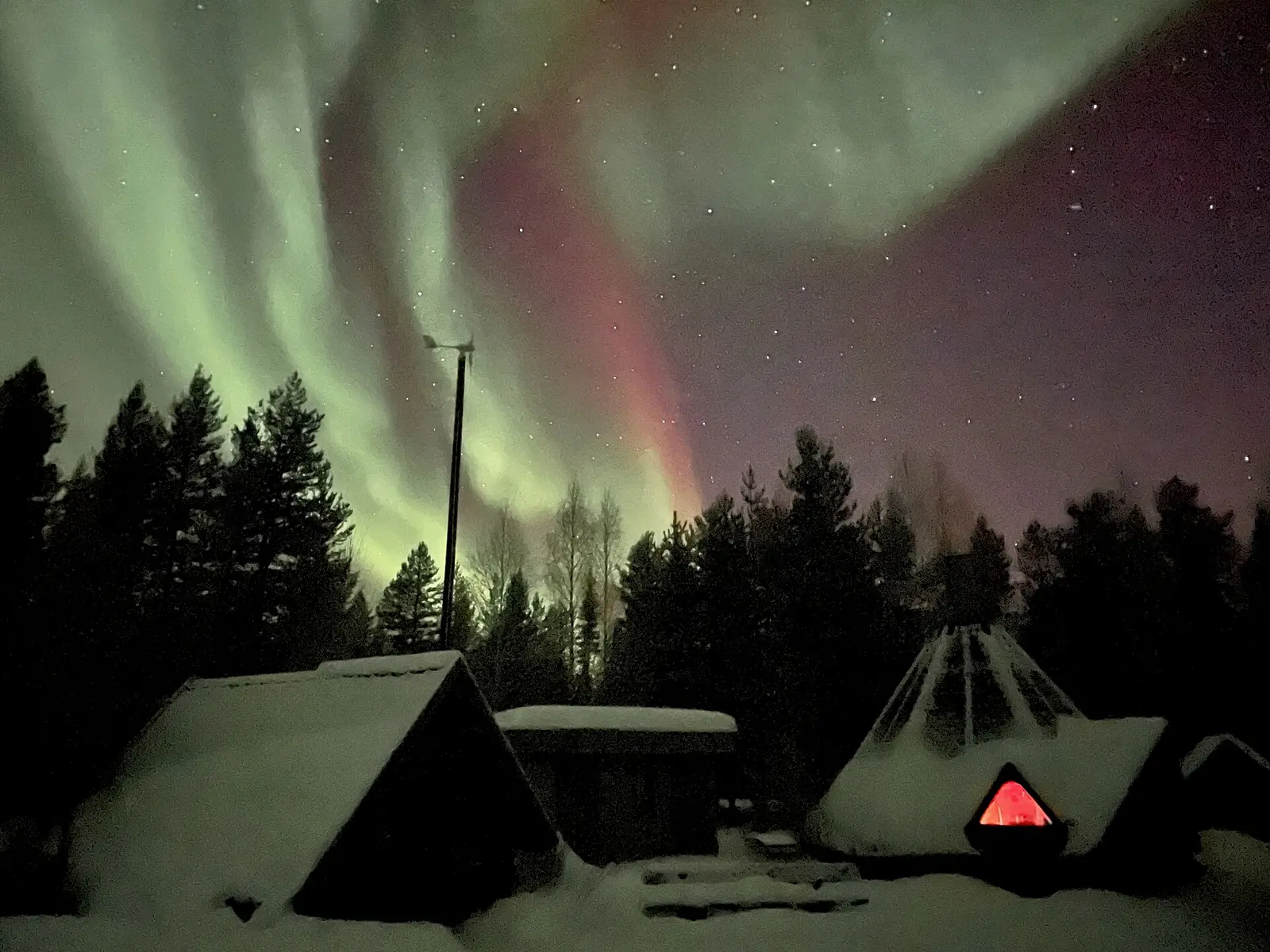
The best time to see the northern lights in Finland
Aurora season, dark hours month by month and the moon calendar for the next two weeks – everything you can plan before you go.
When to come, and which nights to stay up
Darkness and a dim moon are the two things you can plan ahead. Solar activity you can only forecast a few days out – that’s what the live board is for.
Long nights and first proper snow. Good value before the Christmas season.
Moon phase and darkness are calculated; Kp shows NOAA’s 3-day forecast where available. A bright moon doesn’t hide a strong aurora – it just washes out the faint ones.
Aurora season in Lapland
August–September
The season opens as darkness returns. Auroras over unfrozen lakes give mirror reflections, and autumn colours (ruska) peak in September. Mild nights, few crowds.
October–November
Nights lengthen quickly and the first snow arrives. Good value before the Christmas season, but often more clouds.
December–January
Polar night: the longest dark hours of the year and a snowy, magical landscape. The coldest months – dress properly.
February–March
Long nights, bright snowy days and often clearer, colder skies. The spring equinox is known for active geomagnetic conditions.
Early April
The season closes. Short dark window late at night, but spring sun and great snow for skiing by day.
Best time of night
Most displays happen between about 21:00 and 02:00, often peaking around midnight – but the aurora can appear any time it is dark. Stay three to four nights to give yourself several chances of clear skies. See the live forecast for the next three days.