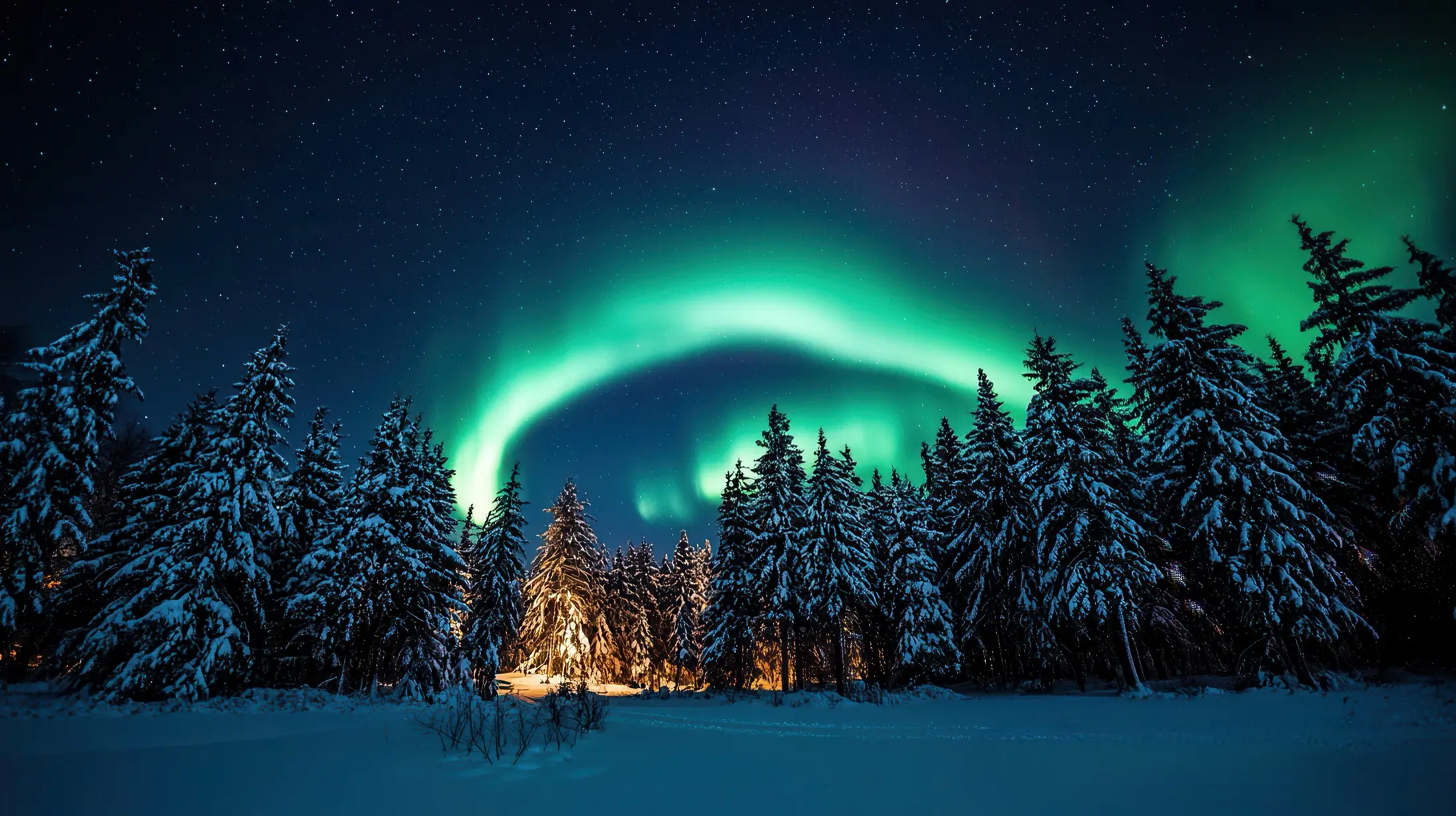
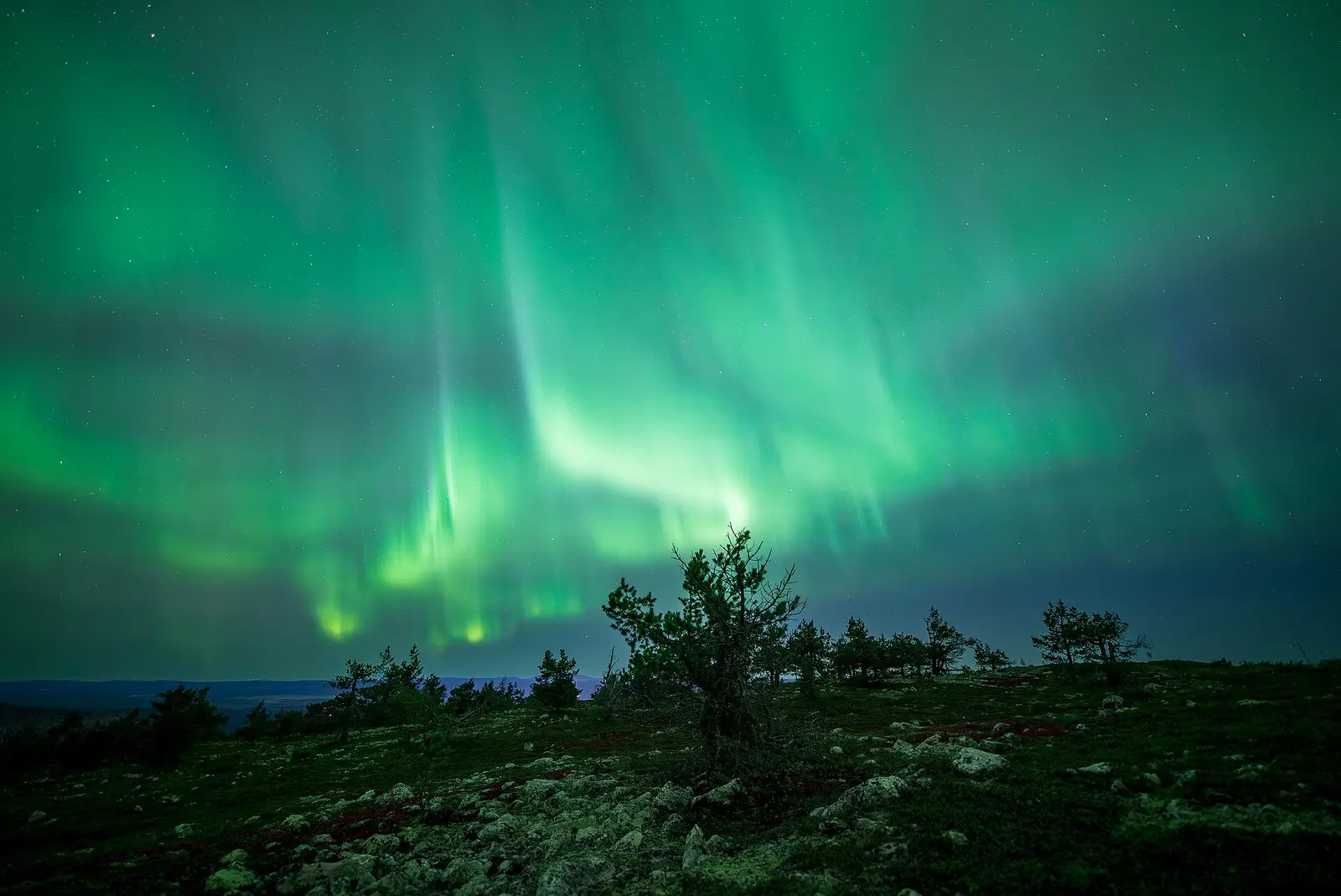
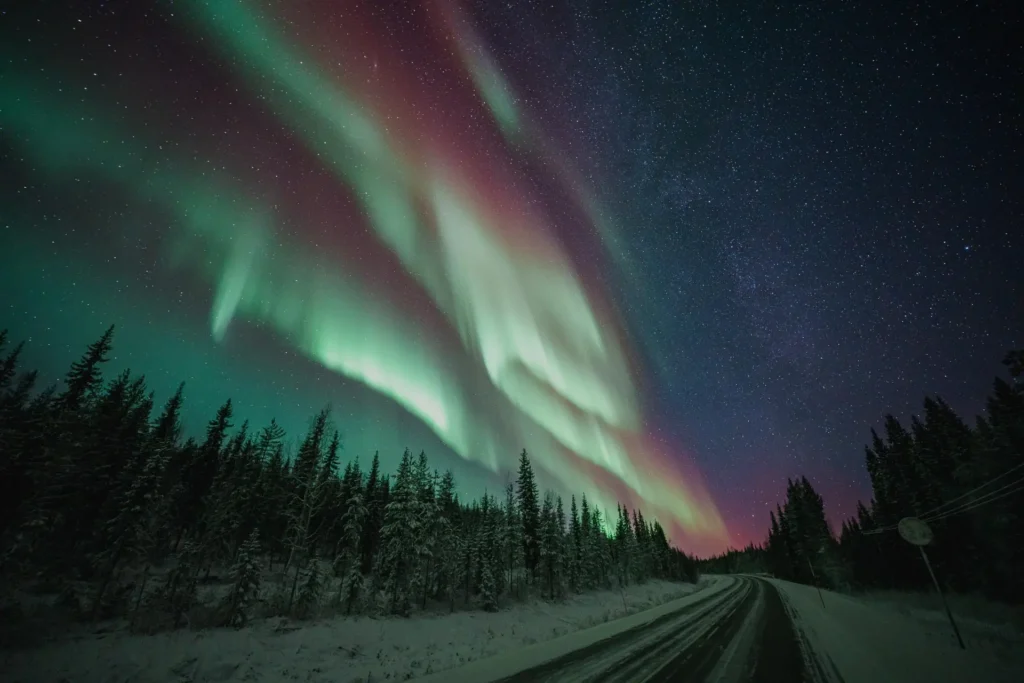
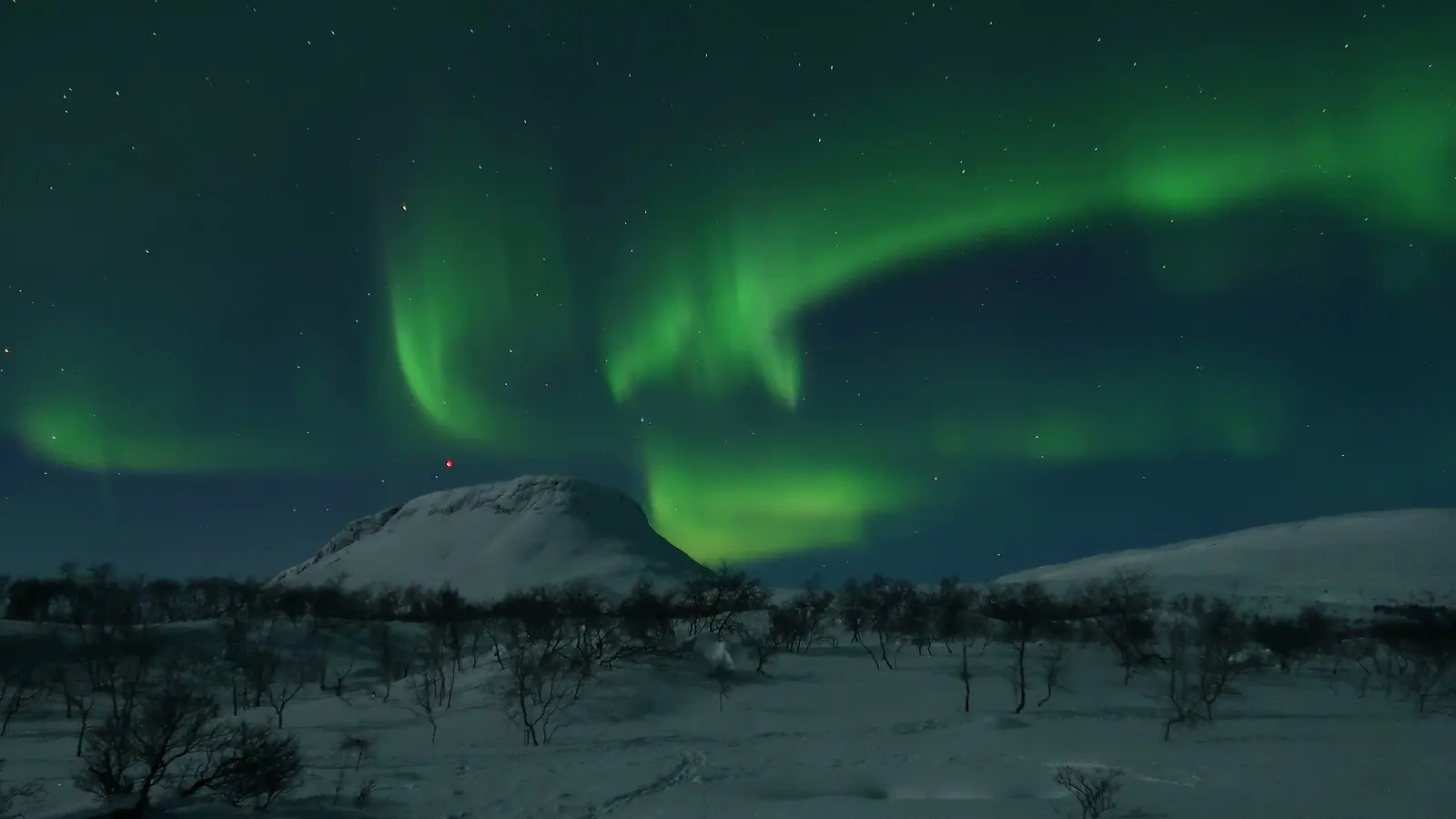
Northern lights in Lapland in February

Long nights, bright snowy days and more clear skies as winter turns towards spring.

February in numbers

Darkness, weather and clear skies

Rovaniemi · mid-February
Dark hours per night
12.5 h
Average temperature
−8 °C
Average daily low
−11 °C
Average cloud cover
81 %
Mostly clear days
13 %
Snowfall in the month
≈ 28 cm
Inari · mid-February
Dark hours per night
12.7 h
Average temperature
−9 °C
Average daily low
−11 °C
Average cloud cover
80 %
Mostly clear days
10 %
Snowfall in the month
≈ 21 cm

Darkness = sun more than 10° below the horizon, calculated for the 15th. Weather: averages for 2016–2025 from Open-Meteo historical weather data (ERA5).

What to expect

Aurora hunting in February

February combines long, dark nights with lighter days, so you can enjoy winter activities by day and look for the aurora in the evening. The weather is often more settled and clearer than in early winter.

It is still cold, especially on clear nights, and the snow cover is deep – perfect for aurora photos with a white foreground.

Tip: Ski holidays in Finland and Europe make February busy – book ahead.

On the night itself, follow the live aurora forecast, the cloud cover maps and the live cameras.

Questions

Northern lights in February: FAQ

Can you see the northern lights in Lapland in February?

Yes. In mid-February Rovaniemi has about 13 hours of darkness a night and Inari about 13 hours, which is plenty of time for the aurora. Clear skies are the key – check the live forecast before heading out.

How cold is Lapland in February?

Over 2016–2025 the average temperature in February was about −8 °C in Rovaniemi and −9 °C in Inari, with average daily lows around −11 °C and −11 °C. Clear nights are usually colder than average.

How cloudy is February in Lapland?

Average cloud cover in February is around 81 % in Rovaniemi and 80 % in Inari. About 13 % of days in Rovaniemi and 10 % in Inari were mostly clear (under 50 % cloud) on average.

Is February a good time for an aurora tour?

Long nights, bright snowy days and more clear skies as winter turns towards spring. Guided tours help most on cloudy nights, when the guides can drive to clearer skies.